
Registration Link: 2https://syracuseuniversity.qualtrics.com/jfe/form/SV_8iFlk1pvZ0kqpgO026
Event Description: This symposium will examine American law at a pivotal historical moment: reflecting on the development of legal institutions over the past 250 years while also considering the questions, challenges, and possibilities that will shape the future of American law. We welcomed both historical and forward-looking perspectives across all areas of legal scholarship.
The symposium will be organized in two parts. The first will focus on the evolution of American law and legal institutions, asking participants to reflect on foundational ideas, institutional development, and the changing meaning of democracy, citizenship, and rights in the United States. The second will focus on the future of American law, exploring emerging legal questions, new frontiers in scholarship and governance, and the future role of legal institutions in American society.
Event Agenda (subject to change):
8:30: Breakfast and Check-In
9:15: Opening and Welcome
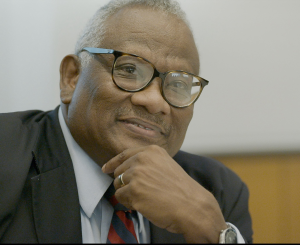
9:30: Morning Keynote – The Hon. Theodore A. Mckee L’75
10:15: Panel I “Drawing the Boundaries of American Society” – Glenys P. Spence, Lars Noah, James Richard Broughton, Tom Lininger
11:30: Lunch in the Library Reading Room
12:45: Panel II “Living Within the Boundaries: Individual Liberties and Fundamental Rights” – Jamie R. Abrams, Paula C. Johnson, Carla Pratt, José Felipé Anderson
2:15: Afternoon Keynote – The Hon. Mae A. D’Agostino L’80
2:45: Conclusion
The Syracuse Law Review Symposium, “American Law at 250: The Unfinished Undertaking,” provides four (4) hours of CLE credit for Professional Practice in New York State. The College of Law has been certified by the NYS CLE Board New York State Continuing Legal Education Board as an Accredited Provider of continuing legal education in the State of New York. There is no charge for this program.
This program is divided into two distinct, standalone sessions for CLE calculation purposes: Session 1 (Morning) and Session 2 (Afternoon). To receive credit, an attendee must complete an entire designated segment.
-
Session 1 (Morning) Only: Attendees who participate in the entire morning session but do not return after lunch will be eligible for two (2) New York CLE credits.
-
Session 2 (Afternoon) Only: Attendees who arrive for the afternoon session only will be eligible for two (2) New York CLE credits.
-
Full Day: Attendees who complete both the morning and afternoon segments in full will receive the maximum four (4) New York CLE credits.
Arriving late or leaving early during either the morning or afternoon blocks will disqualify the attendee from receiving CLE credit for that specific segment.
Keynote Speakers:
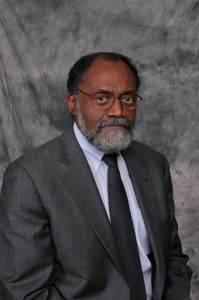
The Honorable Theodore A. McKee L’75
Ted McKee was sworn in as a Judge of the U.S. Court of Appeals for the Third Circuit on June 20, 1994 and became Chief Judge of that court on May 4, 2010 and served in that capacity until 2016. He graduated magna cum laude from Syracuse University College of Law in 1975 where
he was inducted into the Order of the Coif and earned several honors for outstanding academic performance.
He began his legal career at a large Philadelphia law firm but left there in 1977 to begin his career in public service. He has since been an Assistant United States Attorney, Deputy Solicitor
in the Law Department of the City of Philadelphia, and General Counsel to the Philadelphia Parking Authority. He was elected to a 10-year term as a Judge of the Court of Judge of the Court of Common Pleas for the First Judicial District of Pennsylvania in 1984. While a Judge of the Court of Common Pleas, Judge McKee chaired the Pennsylvania Sentencing Commission.
He was appointed to the Court of Appeals by President Clinton shortly after being retained for a
second 10-year term on the Court of Common Pleas. Judge McKee serves on the boards of directors of several nonprofit organizations and institutions including the Vera Institute of Justice, Syracuse University and the National Constitution Center. He is also a member of the Board of Visitors of Temple Law School, an honorary member of the Board of Visitors of Syracuse University Law School and has been an advisor to the American Law Institute’s Project to revise the sentencing provisions of the Model Penal Code.
Before becoming Chief Judge of the Third Circuit, he served on the Criminal Law Committee of the
United States Judicial Conference. Judge McKee also is a past co-chair of the National Academy
of Science Committee on Law and Justice and is one of the inaugural members of the Council on
Criminal Justice, a national “think tank” comprised of leading scholars, lawyers and judges that
focuses on issues related to criminal justice and criminal justice reform. He is also a member of
the Advisory Board of the Morris Arboretum of the University of Pennsylvania.
Judge McKee’s official travels have included Ghana, where he taught law and worked with the
Ghanaian Supreme Court; as well as Russia, where he had the honor of addressing the Council of
the Russian Judiciary on the Independence of the American Judiciary.
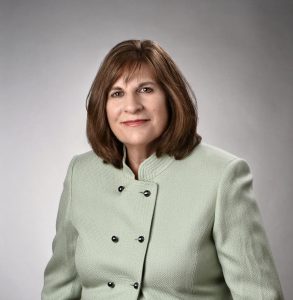
The Honorable Mae A. D’Agostino L’80
Mae A. D’Agostino is a United States District Judge for the Northern District of New York. At the time of her appointment in 2011, she was a trial lawyer with the law firm of D’Agostino,
Krackeler, Baynes, and Maguire.
Judge D’Agostino received her B.A. degree magna cum laude from Siena College. While at Siena she was a member of the women’s basketball team. In 1980, she graduated from Syracuse University College of Law, where she was a member of the national champion trial team of the American College of Trial Lawyers’ Mock Trial Competition and recipient of the International Academy of Trial Lawyers Award for distinguished achievement in the art and science of advocacy. Judge D’Agostino was also a teaching assistant in the College of Law’s Legal Research and Writing Course. Judge D’Agostino is a member of the American College of Trial Lawyers and the International Academy of Trial Lawyers.
Judge D’Agostino is currently a member of the State-Federal Judicial Council, having served as
chair for three years. She is also co-chair of the Second Circuit’s civics education committee.
Judge D’Agostino has a passion for teaching civics education to children, and was the 2022
recipient of the Judge Duane Award in the Northern District for her outstanding efforts to
provide civics education to children of all ages. She is also an annual judge for the final rounds
of the New York State High School Mock Trial Competition. Most recently in 2024, Judge
D’Agostino was the recipient of the Hon. Leslie E. Stein Gender Equity Award by the Third
Judicial District Gender Fairness Committee, and in 2025 she was awarded the Outstanding
Civic Educator Award, given by the American Lawyers Alliance of the American Bar Association.
Judge D’Agostino also has a passion for the development of young lawyers. She has a standing
order in all of her cases that states: “The Court strongly encourages lead counsel to permit young
lawyers to examine witnesses at trial and to have an important role. It is the way one generation
will teach the next to try cases and maintain our district’s reputation for excellence in trial practice.” She issues a similar order regarding motion practice.
Volume 77 Symposium Authors:
Many of our Volume 77 Symposium authors will join us November 6, 2026 for panel discussions. Check back soon for a full event agenda with our confirmed list of panelists.
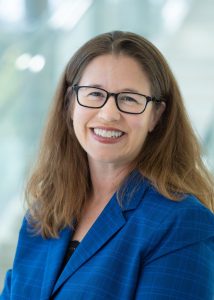
Professor of Law, American University – Washington
The Family as Foundational Civic Instructure
Synopsis: Examining 250 years of American legal history, this article considers the family’s role in shaping citizenship, civic engagement, and democratic institutions. It explores how family law provides a distinctive perspective on the relationship between individual rights, state authority, and democratic governance.
Professor of Law, University of Baltimore
The Highway Through Our Home: A Civil Rights Community Interrupted
Synopsis: Focusing on an overlooked civil-rights case, this article investigates how transportation policy/urban planning, civil rights, and constitutional law converged to shape the development of American cities. It highlights the case’s enduring significance for understanding equality, community, and the unfinished pursuit of justice in American law.

Associate Dean for Faculty Research & Development and Professor of Law, University of Detroit Mercy
On Fidelity
Synopsis: Focusing on the constitutional principle of fidelity, this article examines the legal obligations that bind both government officials and citizens to the Constitution. By tracing these duties across constitutional text, statutes, and legal doctrine, it reflects on their significance for American constitutional democracy after 250 years.
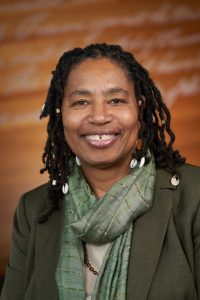
Professor of Law, Syracuse University
No Two Seats: 250 Years of Black Women and the Struggle for Voting Rights in America
Synopsis: Spanning 250 years of American legal history, this article explores the contributions of Black women to the expansion and protection of voting rights while examining the continuing challenges to political participation and representation. It considers what these developments reveal about the nation’s evolving commitment to democratic inclusion.
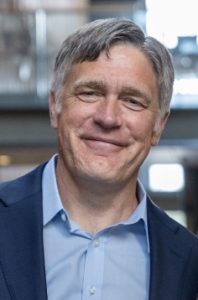
Professor of Law, University of Oregon
What the Founders Got Wrong: Reevaluating Constitutional Rules of Criminal Adjudication 250 Years Later
Synopsis: Reflecting on the Constitution’s 250-year legacy, this article evaluates the strengths and limitations of several constitutional provisions governing criminal procedure. By connecting their historical development to contemporary practice, it examines opportunities to strengthen the protection of individual rights within the criminal justice system.
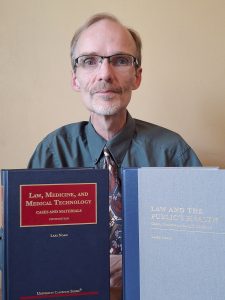
Professor of Law & Eminent Scholar, University of Florida
Scarred by Smallpox: How a Virus at the Founding Left Antibodies in the U.S. Constitution
Synopsis: Drawing on both historical and contemporary public health emergencies, this article explores the constitutional foundations of governmental responses to infectious diseases and health crises. By connecting the nation’s early practices with present-day challenges, it invites readers to reconsider how longstanding legal principles apply in modern public health crises.

Professor of Law, University of Oklahoma
Dred Indian Country: The Racial Foundations of Federal Indian Law at 250
Synopsis: This article examines the enduring influence of race on federal Indian law, exploring how a foundational nineteenth-century Supreme Court decision continues to shape questions of tribal citizenship, sovereignty, and constitutional doctrine. It invites readers to reconsider the legacy of American law at 250 through the lens of federal Indian law.
Assistant Professor of Law, University of Toledo
Ghosts in the Machine: Justice Joseph Story, The Alien Tort Statute and the Constitutional Duality of Modern Privateering
Synopsis: Examining the evolution of constitutional and maritime law from the Founding to the digital age, this article considers how historical frameworks can inform legal responses to contemporary forms of private and cyber-enabled conflict. It highlights the continuing tension between national security objectives and accountability in an evolving legal landscape.